rebel shamans: women confront empire
A visual talk by Max Dashú (90 minutes; or 60 minute option)
Priestesses, diviners and medicine women stand out as leaders of aboriginal liberation movements against conquest, empire, and cultural colonization.
Spiritual spheres of power have been a crucial staging area for women’s political leadership and for challenging systems of domination on many levels, including the battleground of culture.
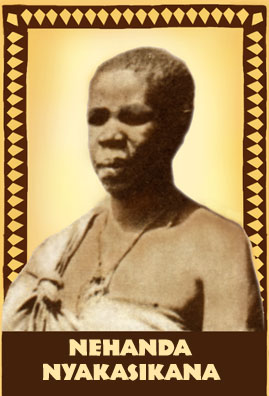
Veleda of the Bructerii (Netherlands), Dahia al-Kahina (Tunisia), the Kumari of Taleju (Nepal), Jeanne d'Arc (France), Tang Saier (China), Juana Icha (Peru), Kimba Vita (Congo), Maria Candelaria (Chiapas), Queen Nanny of the Maroons (Jamaica), Cécile Fatiman (Haiti), Antonia Luzia (Brazil), Toypurina (Tongva Nation, California), the Prophetess of Chupu (Chumash Nation), Wanankhucha (Somalia), Lozen (Apache Nation), Teresa de Cabora (Mayo, Sonora), Nehanda Nyakasikana (Zimbabwe), Muhumusa (Uganda), Nomtetha Nkwenkwe (!Xhosa, South Africa), Alinesitoué Diatta (Senegal). And more.
This visual presentation looks at how indigenous women draw on their cultural traditions to resist colonization --and how, by virtue of who they are and where they stand in the social order, their personal access to direct, transformative power makes the spiritual political.
“Lozen is…strong as a man, braver than most, and cunning in strategy.
Lozen is a shield to her people.” --Victorio, chief of the Chiricahua"Grandy Nanny didn't catch bullets for you alone."
--Jamaican saying about Queen Nanny of the Maroons"Neither bishop nor priest, taxes nor king." --Maria Candelaria, Chiapas
"We have saints in Kongo as well." --Kimpa Vita, dona Beatriz de Congo
Teresa Urrea, la Santa de Cabora
"Do you wonder why the tribe fights the forces of such a government? My poor Indians! They are the bravest and most persecuted people on earth! They will fight for their rights until they win or are wiped out. God help them! there are few of them left." --Teresa Urrea, la Santa de Cabora
Teresa was arrested and forcibly deported for her activism by the dictator Porfirio Diaz,who called her "the most dangerous girl in Mexico." She went on with her political organizing, and co-authored El Plan de Tomóchic, which denounced the genocide of the Yaqui Nation, urged restoration of the Liberal Constitution of 1857, and called for abolition of "all laws or social practices that maintain inequality based on gender, race, nationality or class."
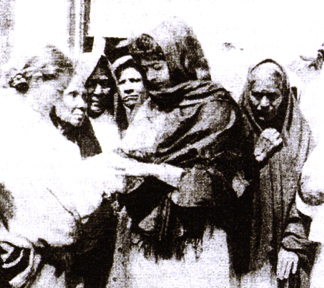
Teresa de Cabora healing in El Paso, Texas
"Viva la Santa de Cabora!" --Cry of Yaqui rebels storming Nogales customhouse, 1896
More on female shamans who led resistance movements:
Wanakhucha, the mganga priestess who led the Zigula
exodus out of slavery in Somalia;
The Bagirwa oracles of Nyabingi on the borderlands of Uganda / RwandaA discussion of Priestesses, Power, and Politics
Suppressed Histories Series: Real Women, Global Vision
Copyright 2006 Max Dashu
Suppressed Histories Archives | Catalog | Bookings